
At a road traffic accident, a casualty’s fate is often decided in the first few minutes. There is no time to think: the team reacts the way it has trained. That is why the world’s best rescuers meet in one place every year, to show what they know and learn what they don’t yet.
This year that place was Rio de Janeiro, and among them was our Damir from Horvat Innovative Labs, Skipper4you’s technology partner. This time he wasn’t at the helm, but alongside firefighters who save lives.
What is the World Rescue Challenge?
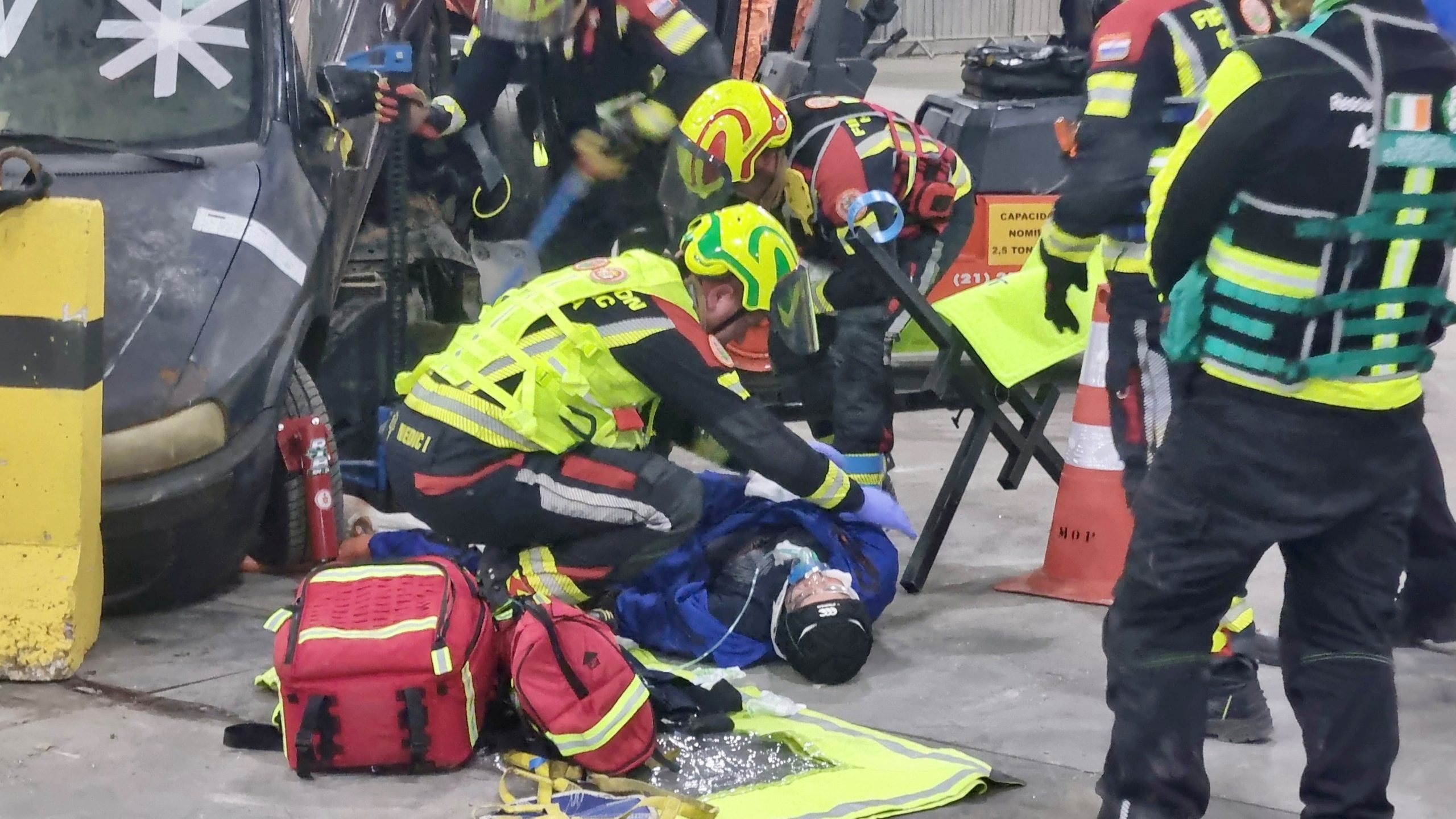
The World Rescue Challenge (WRC) is the world championship in road traffic rescue. It is organised by the World Rescue Organisation (WRO), and every year it brings together the world’s best rescue and medical teams to compete, learn and share best practice.
In Rio, 38 rescue teams from 16 countries took part, working through simulations and casualty-care challenges from road traffic accidents until 22 November.
Each team is given a realistically staged accident: real vehicles, actors playing casualties and a scenario the team only sees when it arrives on scene. Within the time limit, the team has to assess the situation, secure the scene, stabilise the vehicle, extricate the casualty and provide medical care. The judges don’t just look at speed. They assess command, technique, medical care and teamwork.
Karlovac 2025: when the world came to us
Over the past three years Croatia has risen to the very top of this competition, and in 2025 Karlovac was the host city. It was the 25th edition of the championship, with 72 teams in two disciplines from 25 countries.
In preparation for the championship, Skipper4you and Horvat Innovative Labs filmed and produced 11 VR training videos for firefighters specialising in road traffic rescue. The videos were presented to international participants alongside an expert presentation and seminars. Firefighters from all over the world could put on VR headsets and see first-hand what the training of the future looks like.
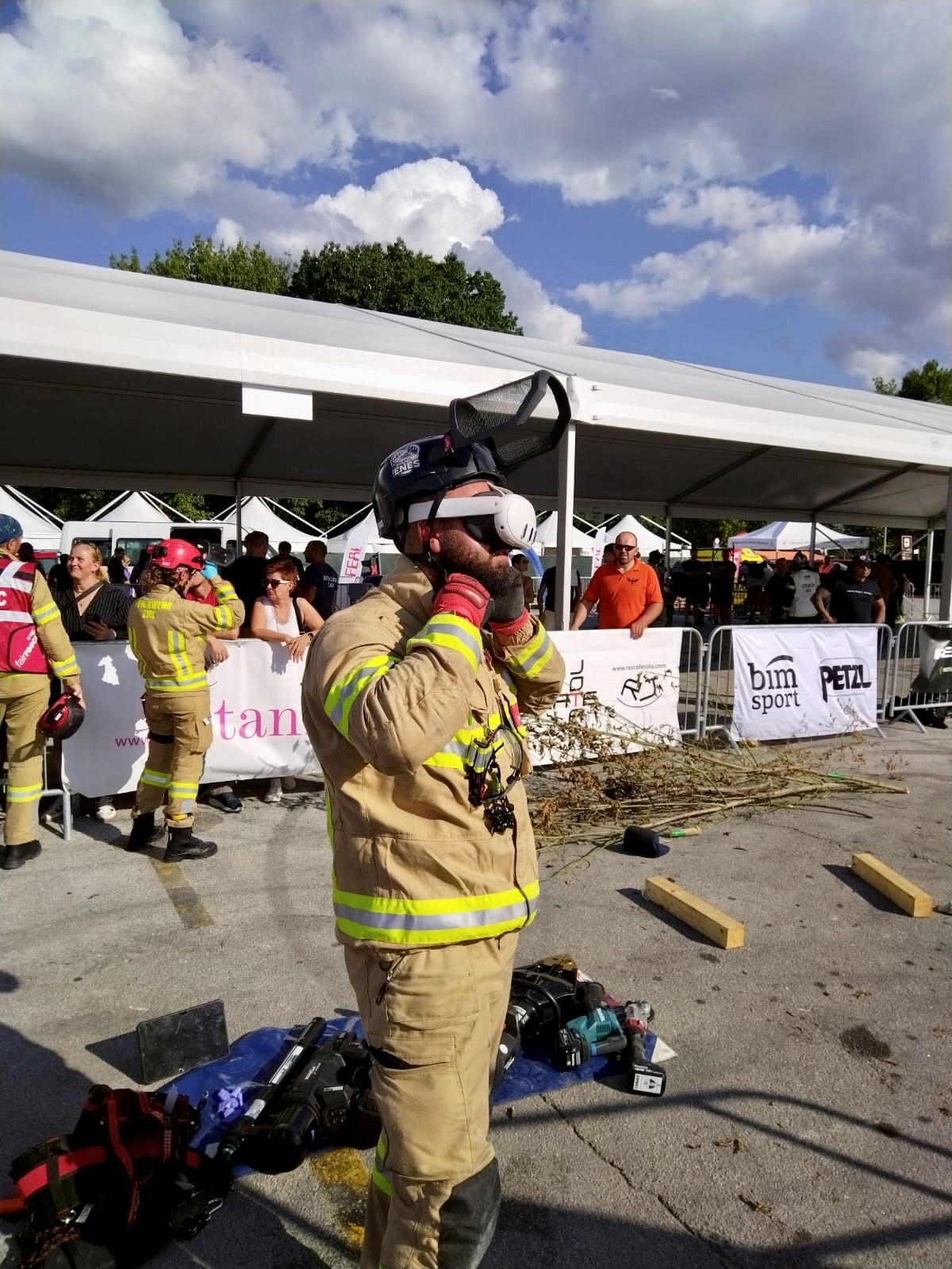
Rio 2026: a testing ground for new scenarios
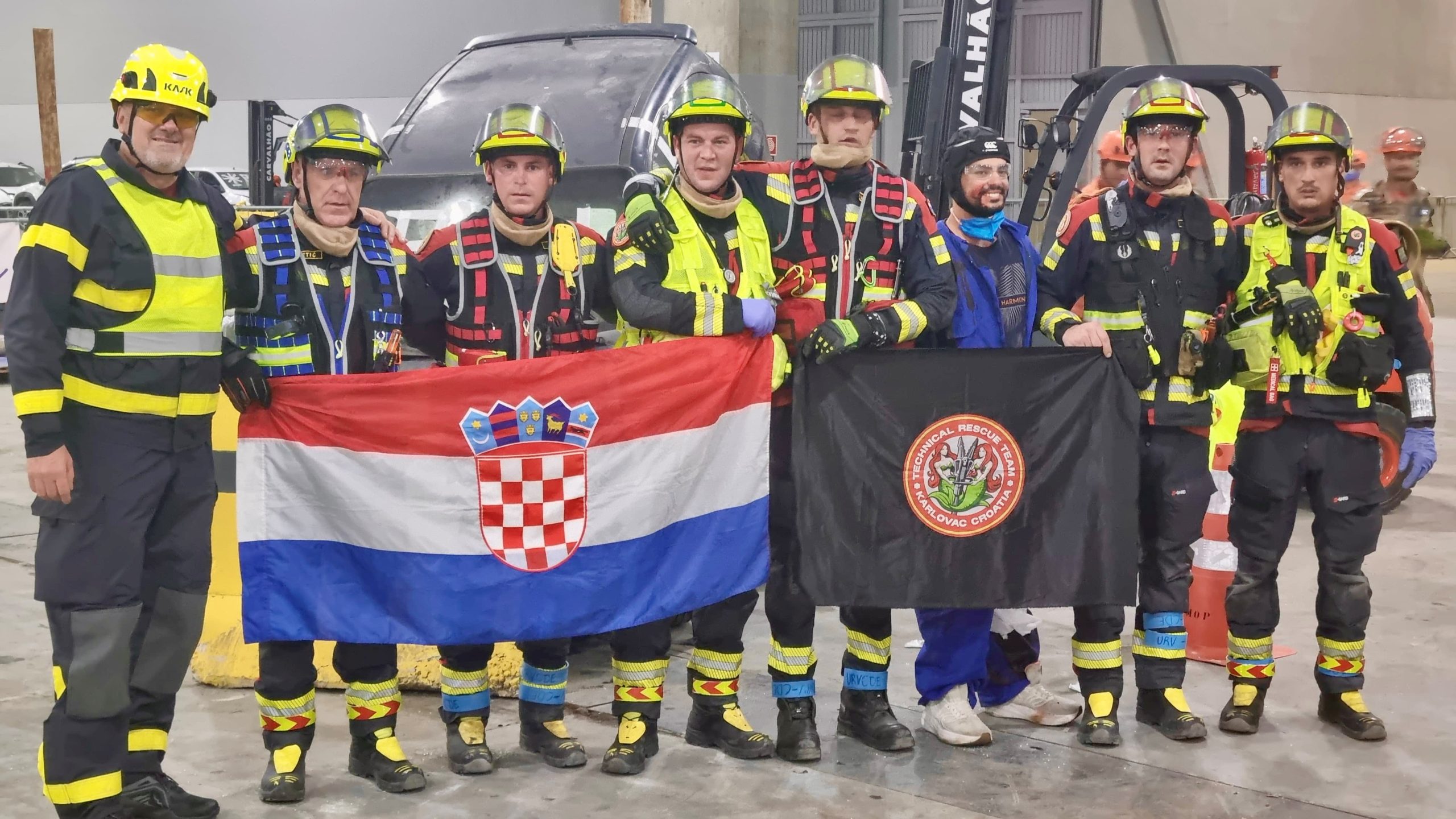
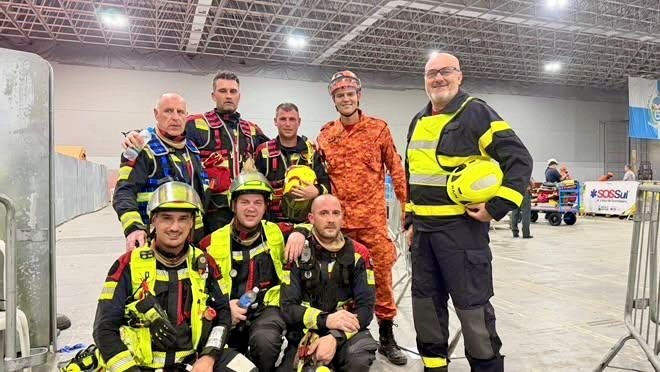
This year, the Karlovac Public Fire Brigade (JVP Karlovac) competed in Rio, with Damir supporting the team as interpreter and support.
The focus of this year’s competition was on new scenarios drawn from lessons learned on real call-outs. For Horvat Innovative Labs, it was field research: everything seen in the arena is material for the next generation of VR videos.
What does this have to do with the sea?
More than you might think.
A rescue team and a yacht crew work on the same principle. Man overboard, an engine room fire, mooring in a bura, an injury on deck: these situations rarely happen, but when they do, they don’t forgive mistakes.
That is exactly where VR training adds the most value. These situations can’t be safely practised at sea as often as they should be, but in virtual reality they can be repeated until the response becomes automatic.
That is why it matters to us to have a technology partner whose VR training has already proven itself in front of the world’s best rescuers.
Looking ahead
“Computer-assisted virtual reality has proven its value in firefighter education and training. The share of immersive training keeps growing, and it can be applied in any system where safety depends on how well people are trained,” says Damir.
For us at Skipper4you, this confirms what we have believed from the start: a good boat matters, but safety at sea depends on a well-trained crew.
The best training is the kind after which, on a real call-out, on the road or at sea, nothing happens for the first time.
Safety at sea starts with training
At our Skipper Academy, future skippers and hostesses learn to work at sea through hands-on practice, responsibility and real-life situations.